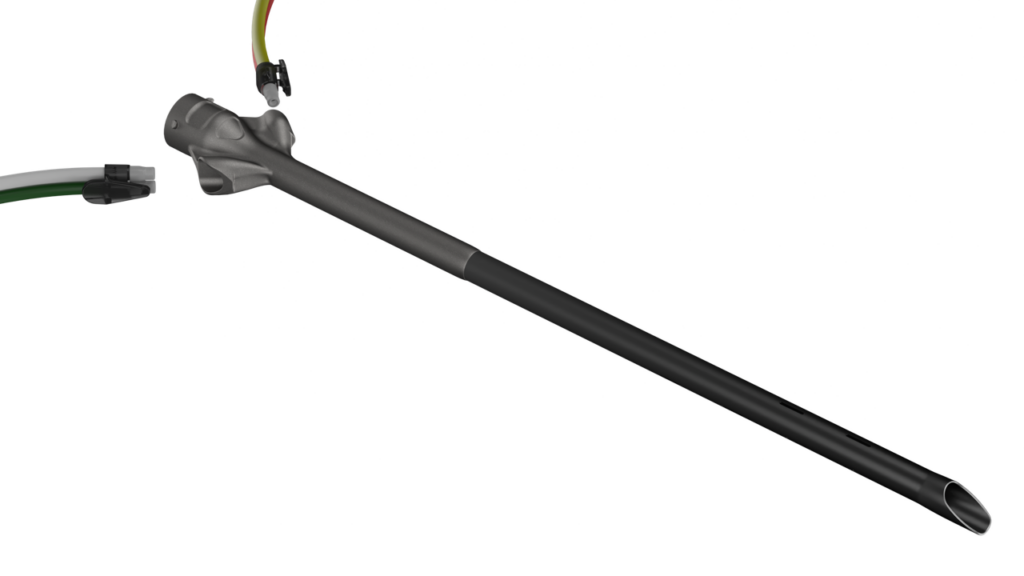
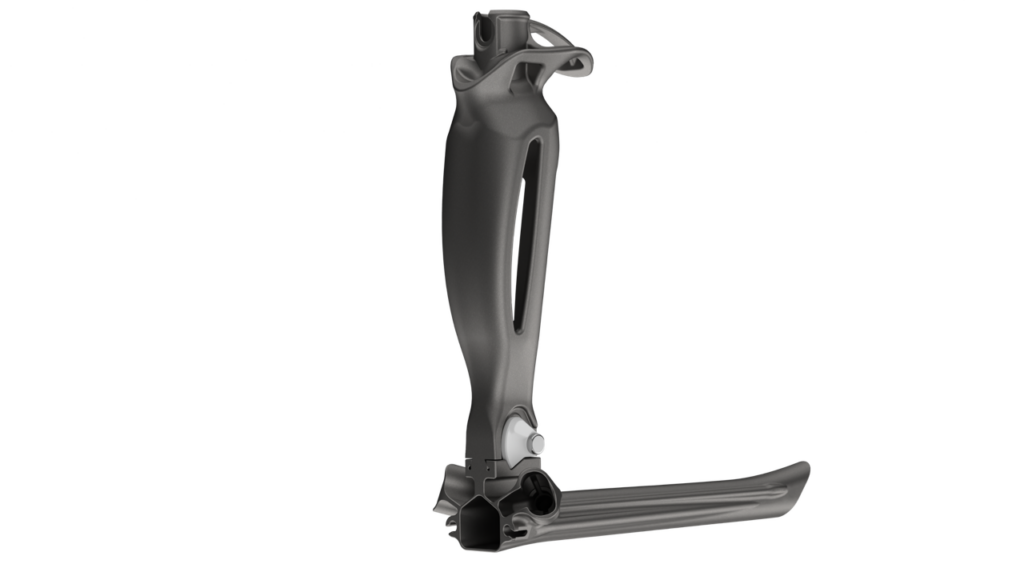
In collaboration with the medical technology company Carl Reiner, M&H manufactures key components for a new generation of ENT instruments. The additively manufactured components are produced using 3D metal printing at the Ilz site, paving the way for a wider range of variants, shorter development times and the cost-effective production of small batch sizes.
Medical instruments must meet the highest standards of precision, functionality and quality. At the same time, there is a growing need for a variety of sizes and designs to better accommodate anatomical differences.
Conventional manufacturing processes quickly reach their economic limits, particularly when it comes to small production runs or additional variants. Metal 3D printing opens up new possibilities: components can be produced without the need for tooling and adapted to new requirements within a short space of time.
Key components from Ilz
M&H is manufacturing the key tubular components for the new jet endoscopes as part of the project. These components form the functional heart of the instruments and integrate mechanical and fluid dynamics functions into a single component. In addition, components for a bronchoscope are being produced using additive manufacturing.
3D metal printing enables the creation of complex internal geometries and integrated channels that would be difficult or impossible to produce using conventional manufacturing processes. At the same time, additive manufacturing reduces assembly time, as multiple functions can be integrated directly into the component.
Greater flexibility in development and production
A key advantage of additive manufacturing lies in its flexibility. New variants or additional sizes can be produced within a few weeks without the need for new tools. This means that even small production runs can be produced cost-effectively and development processes can be significantly accelerated.
Titanium is used as the material. This material combines high strength with low weight and excellent biocompatibility, and is therefore particularly suitable for demanding applications in medical technology.
Additive manufacturing as a driver of growth
Medical technology is one of M&H’s strategic growth areas. In recent years, the company has made targeted investments in new applications, development projects and additive manufacturing technologies. Many of these projects are now in series production or on the verge of it.
The collaboration with Carl Reiner is a prime example of how additive manufacturing can be used to bring innovative product concepts to market cost-effectively – from development through to prototyping and mass production.