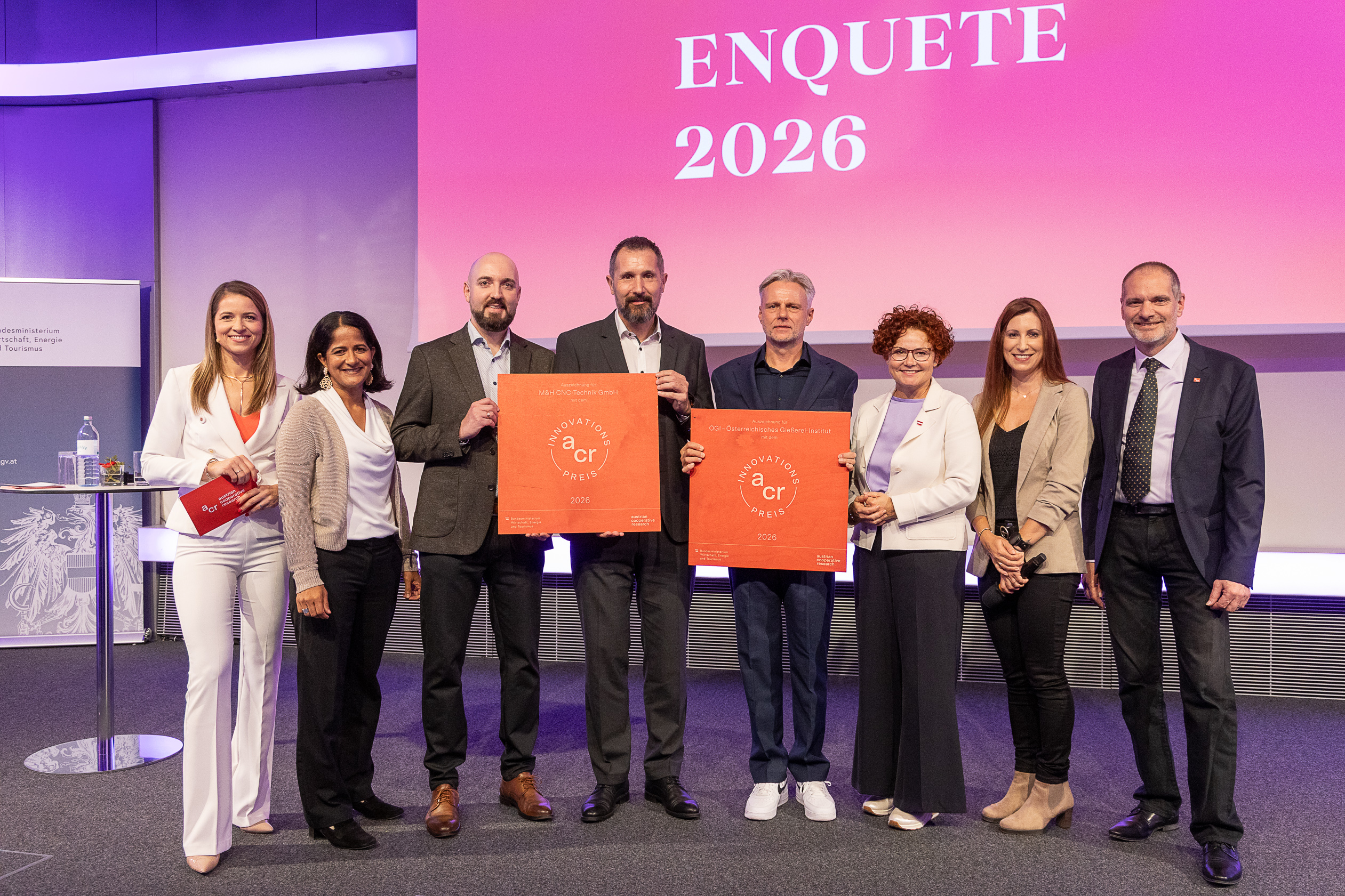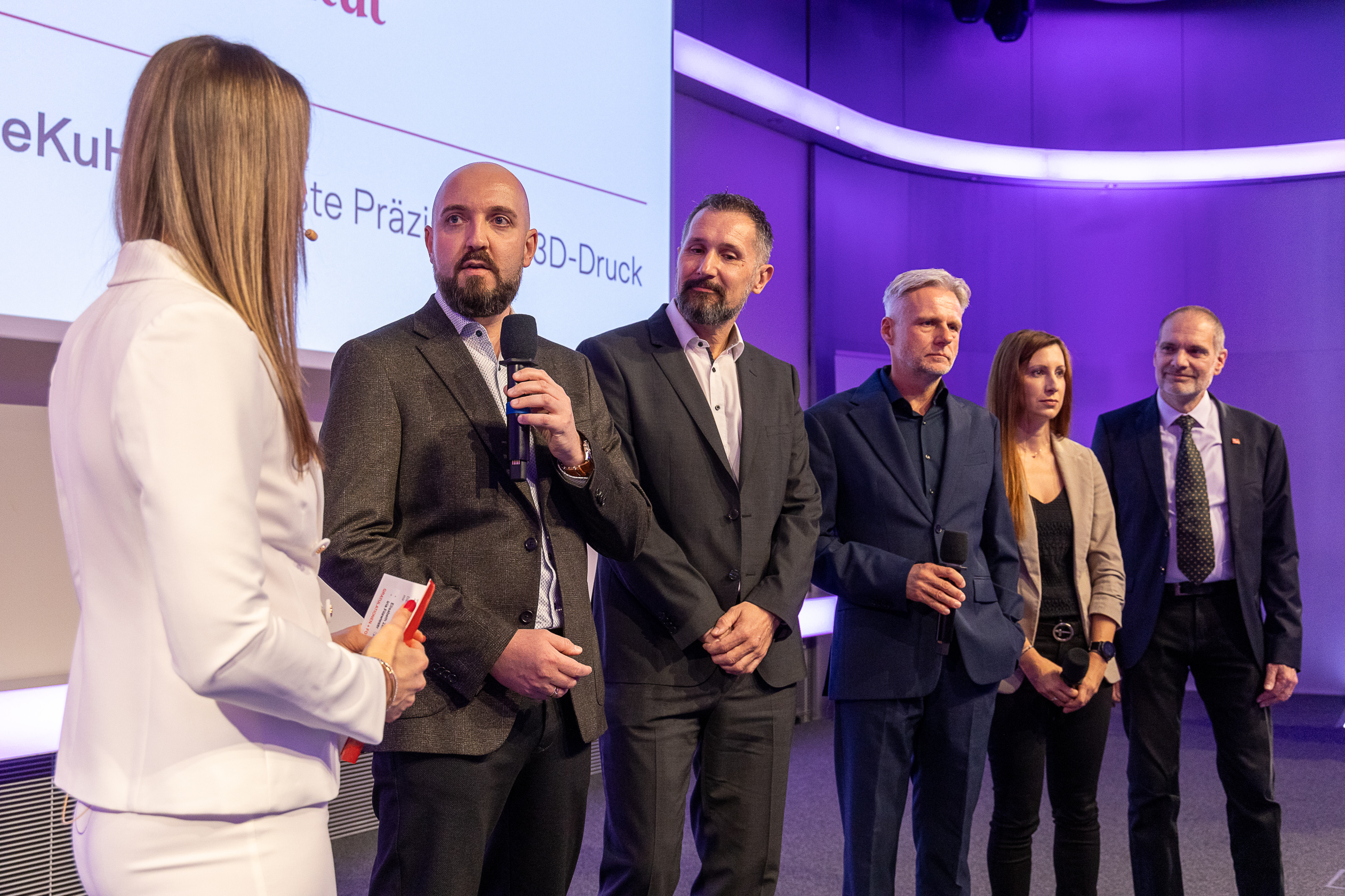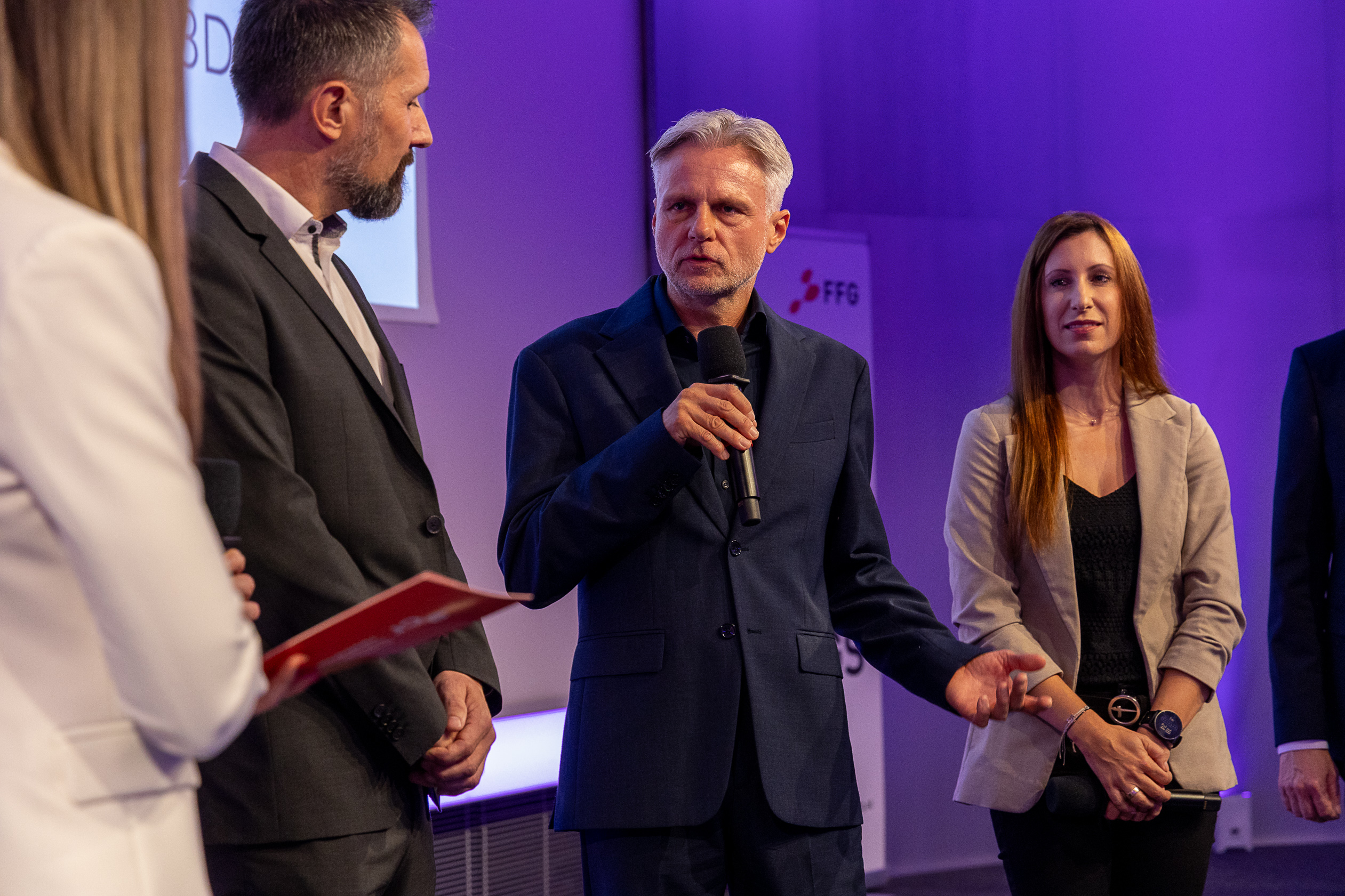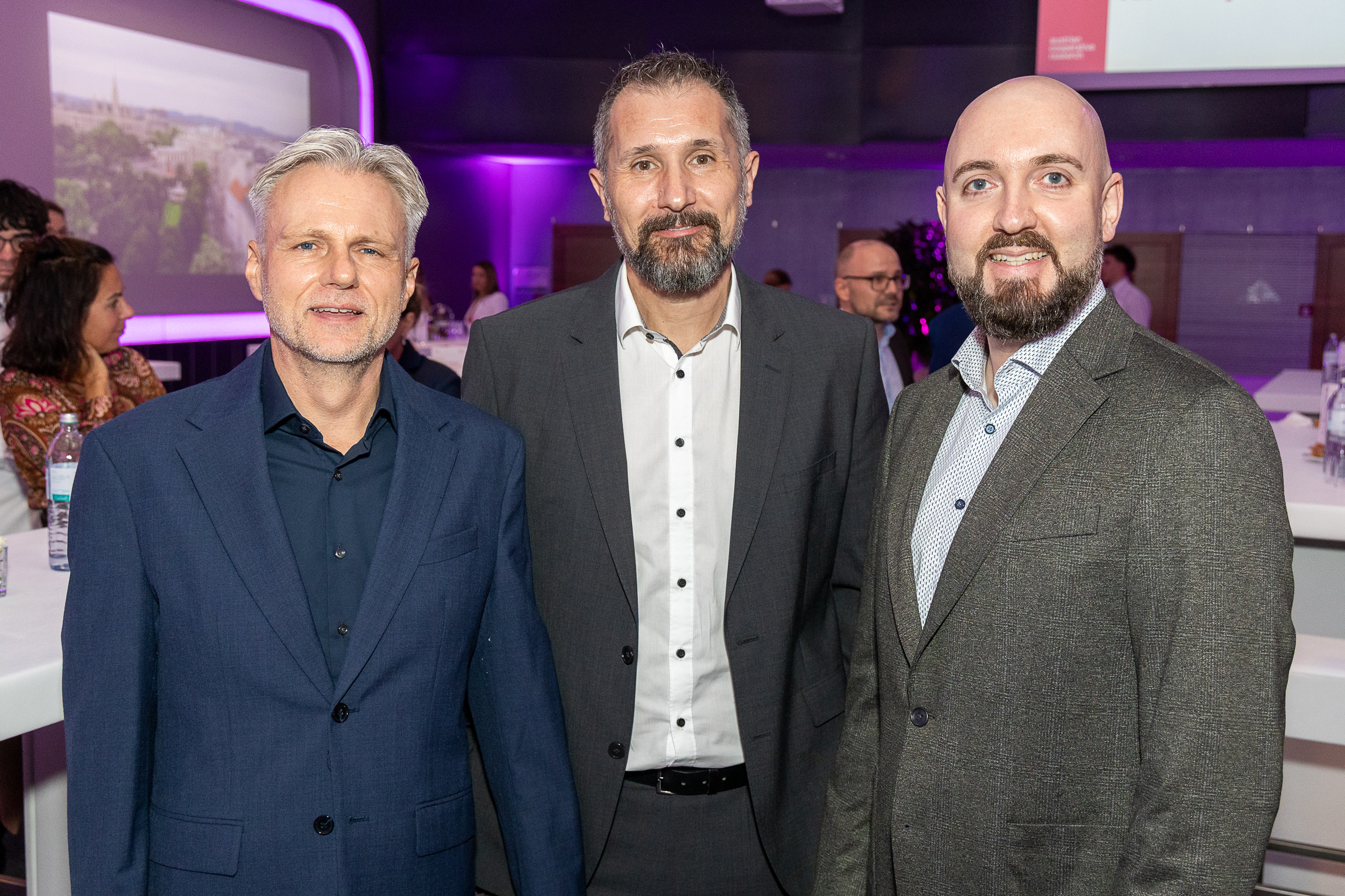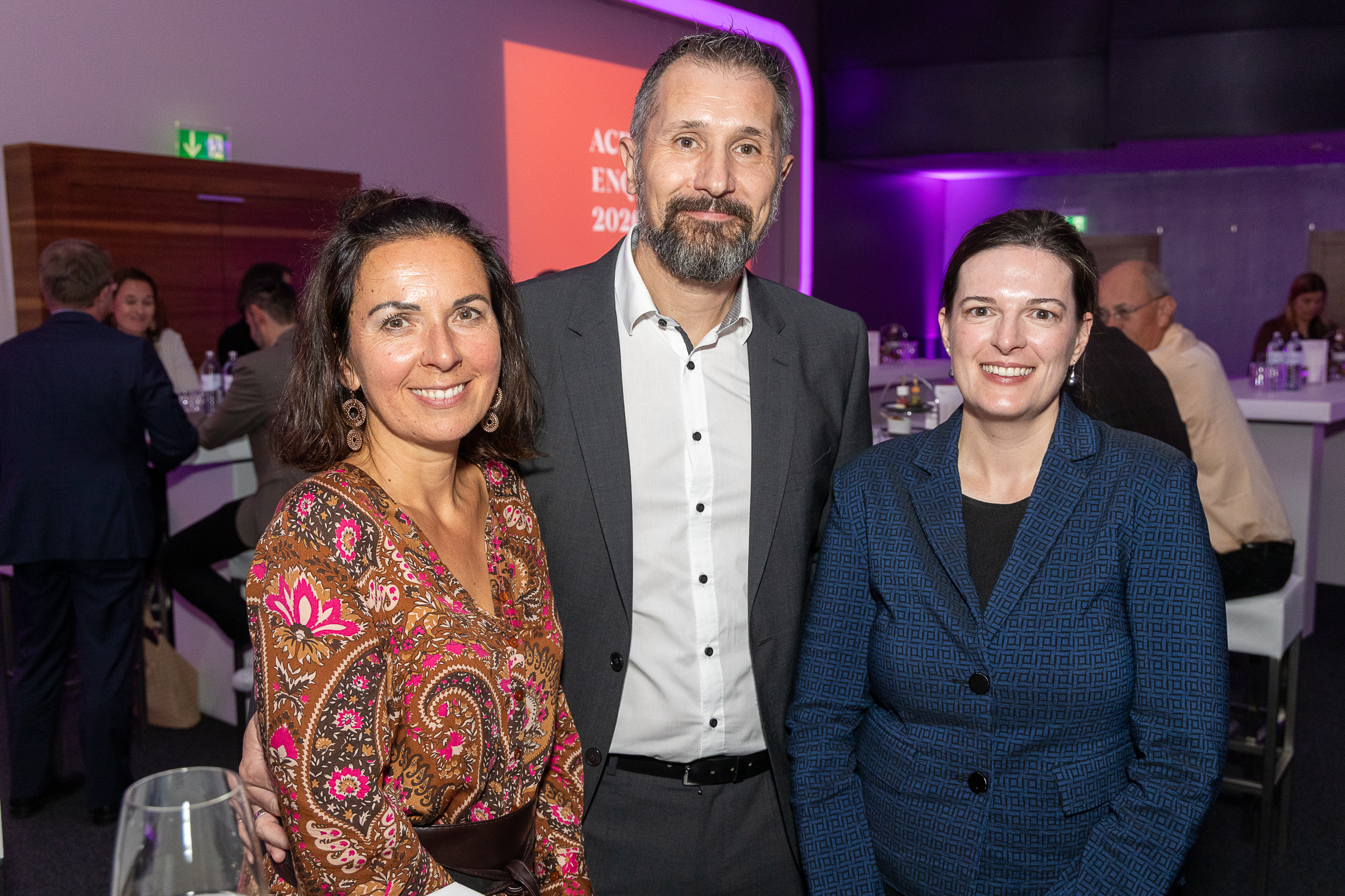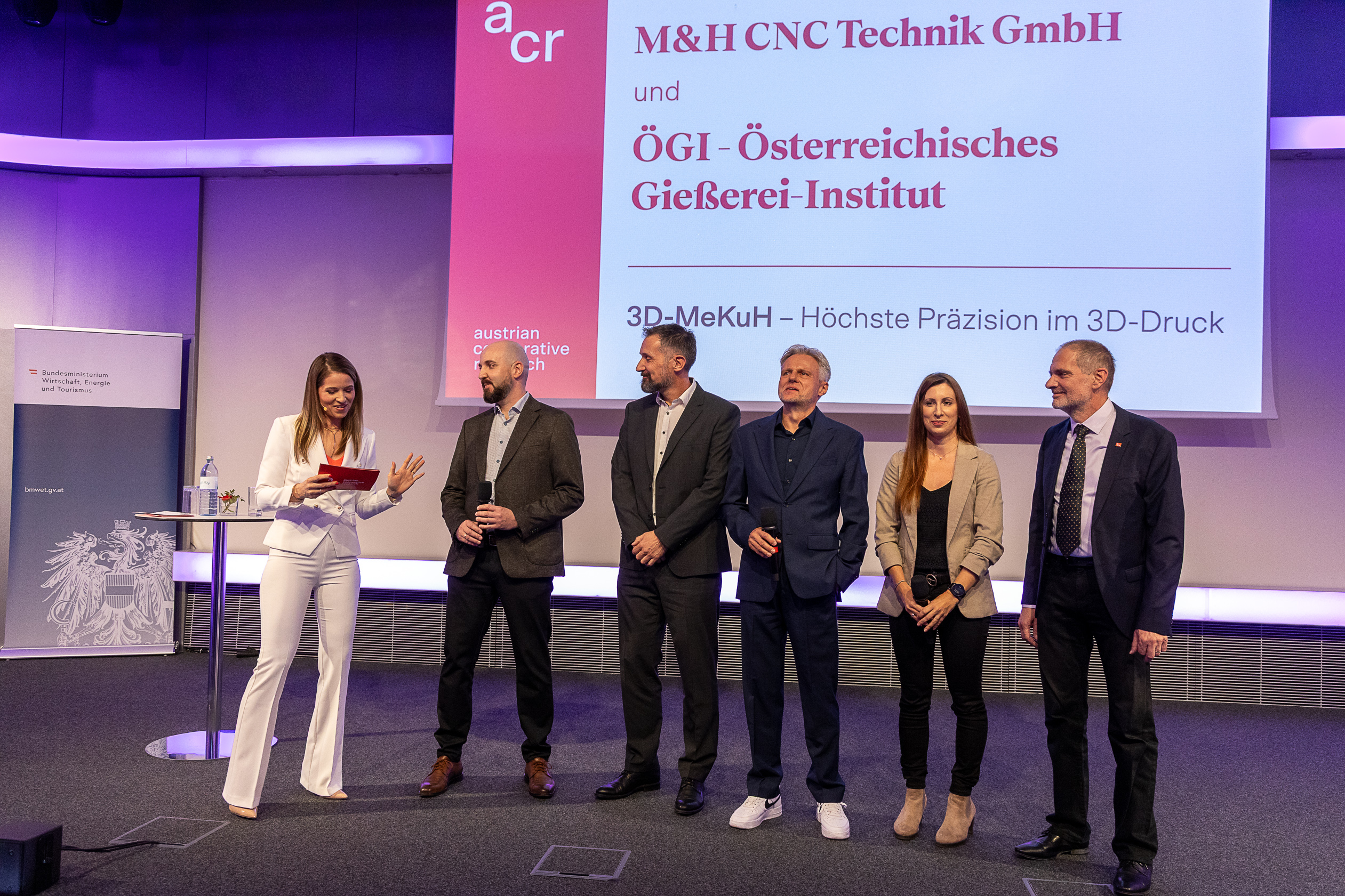
How light can a component be made without compromising its strength? Together with the Austrian Foundry Institute (ÖGI), we have been working on the “3D-MeKuH” research project to provide a more precise answer to this question in the context of additive manufacturing. This collaboration has now been recognised with the ACR Innovation Award 2026.
Industrial 3D printing opens up new possibilities in lightweight construction: complex geometries make it possible to apply material precisely where it is needed to ensure a component’s function and load-bearing capacity. To reliably realise this potential, the properties of the components must be calculated as accurately as possible during the development phase.
This is where ‘3D-MeKuH’ comes in. The project developed a simulation-based methodology that enables 3D-printed metal, plastic and hybrid components to be designed and evaluated with greater precision. Comparing simulations with real-world tests helps to predict component behaviour more reliably and reduce the risk of costly failed attempts.
Research meets industrial manufacturing
At M&H, we have brought our experience in industrial metal 3D printing to the project. Our close collaboration with the ÖGI combines scientific methods with the requirements of practical manufacturing. The results thus provide a basis for coordinating weight, material usage and load-bearing capacity in a more targeted manner – for greater safety and cost-effectiveness in lightweight construction.
The ACR Innovation Award 2026 recognises this joint development work. We are delighted to receive this award and would like to thank the ÖGI and everyone involved in the project for their successful collaboration.