
For the first time in Austria, a component produced by a 3D printer is currently taking off. The Upper Austrian aircraft supplier FACC and the Styrian 3D printing pioneer M&H have jointly developed an additively manufactured aircraft wing component and brought it to series production. Austro Control has now given the green light for the innovative component, which is set to be fitted in business jets in future.
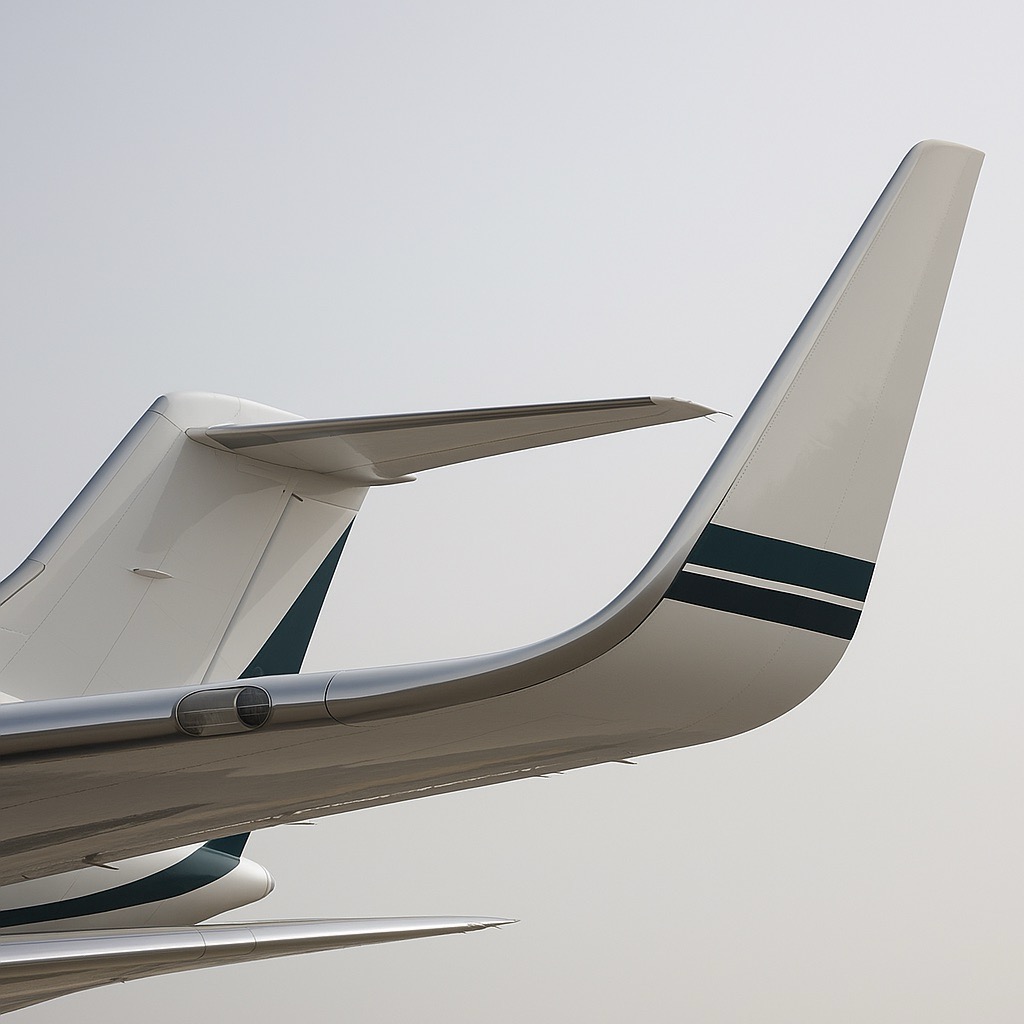
ILZ. Lighter materials, more sustainable fuels or optimised flight paths: in the aviation industry, no stone is currently being left unturned in the quest to minimise environmental impact. Efforts to make flying more climate-friendly are being made at every turn and at every wing tip. Austrian expertise is also playing its part: following a development and certification process lasting almost three years, the Upper Austrian aerospace supplier FACC and the Styrian 3D printing pioneer M&H have, for the first time, developed a wing tip – a so-called ‘winglet tip’ – using a metal 3D printer and brought it to series production.
The duo has now received the go-ahead from the relevant authority, Austro Control, for the component’s certification – a first in Austrian aviation history: “In this industry, the requirements for safety and reliability are extremely high. Every component must undergo comprehensive material testing to ensure it can withstand a wide range of stresses. This means that not only the mechanical properties but also resistance to extreme weather conditions are tested. In addition, material compatibility plays a crucial role. This certification is therefore of the highest significance,” explains FACC project manager Fabian Mayer.
A major impact
As unassuming as this component may seem, its impact is significant: This small curve – now made of aluminium – at the tip of the wings makes the aircraft significantly quieter, more economical and more efficient. “Thanks to additive manufacturing, we are no longer bound by the limitations of traditional tools and moulds. Instead, we can create organic, flowing designs that are optimised for aerodynamic efficiency in aviation,” explains Patrick Herzig, Managing Director of M&H.
“This design freedom makes it possible to further reduce the weight of components whilst maximising their strength,” says the 3D printing expert. As a result, more efficient, lighter and higher-performance aircraft components would be produced, Herzig emphasises. In concrete terms, this means: “The projected fuel savings of around two and a half to five per cent lead, depending on the size of the aircraft and its annual flight time, to a reduction in CO₂ emissions of several tonnes per year – per aircraft,” Herzig explains.
Investment in 3D printers
Another advantage of additive manufacturing is that, whilst traditional manufacturing processes leave visible weld seams or joints, 3D-printed parts can be produced in a single piece with a smooth surface. “This is particularly important in areas where not only function but also appearance is key – as is the case with business jets,” says Herzig. In future, FACC will be installing these innovative components in business aircraft. M&H is determined to further establish itself in this business sector and to continue developing the technology. “The range of applications for 3D-printed components in aviation is growing steadily.” To this end, the company has recently invested in a new metal 3D printer from Nikon SLM: this is already the second machine of its kind at M&H and will further expand the company’s manufacturing capabilities, according to the managing director.